High Water Table, Slow Drains, and Why Palm Beach County Lines Silt Up
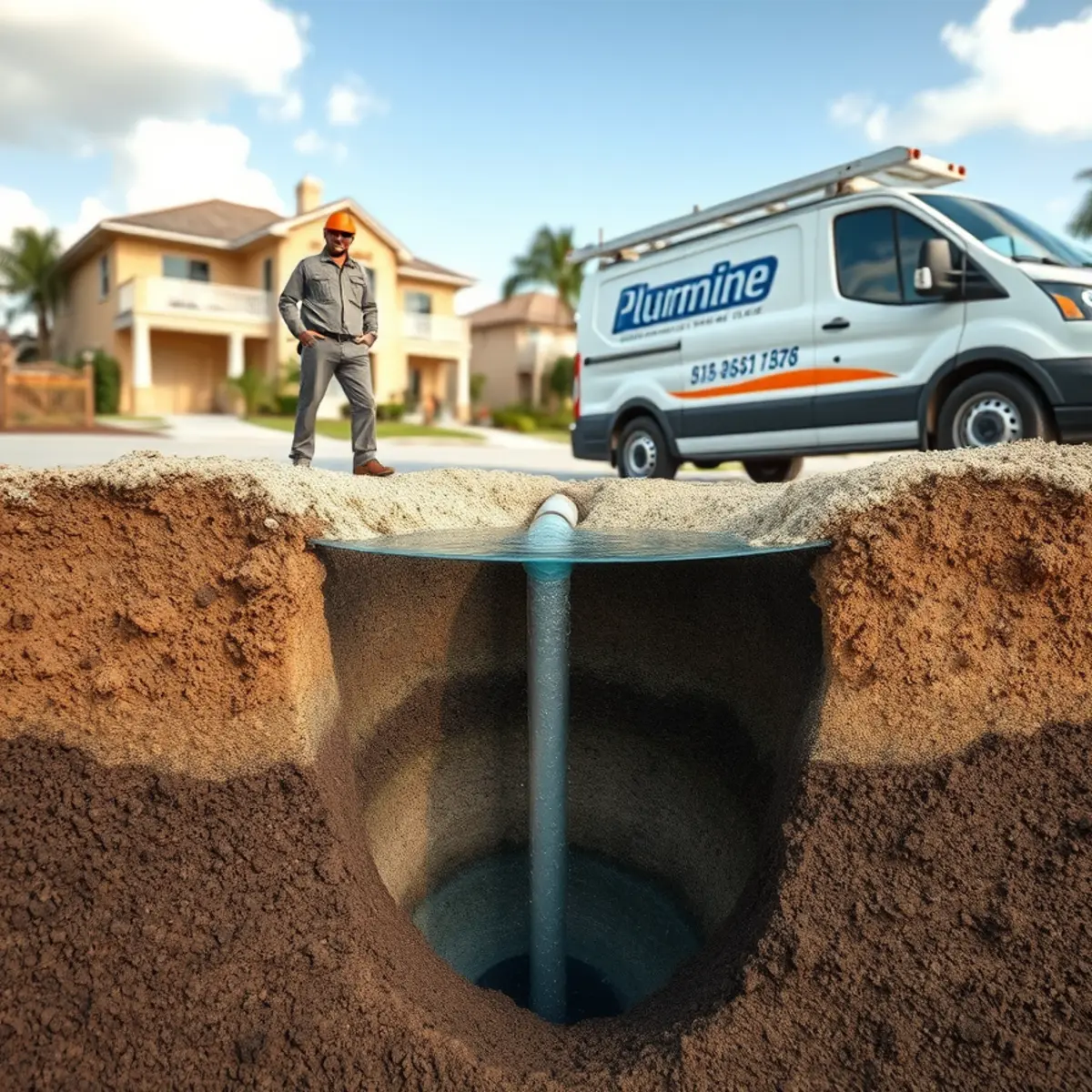
Much of Palm Beach County sits on sandy soil over a water table that is remarkably close to the surface, in some communities just a few feet down. That geology is why the region drains beautifully in some ways and terribly in others, and it is directly responsible for a class of drain problems that has nothing to do with what you put down the sink.
If your drains have gotten gradually slower for no obvious reason, the ground itself may be the culprit.
How a high water table gets into your pipes
Sewer lines are not perfectly sealed forever. Over time, joints loosen, cast iron corrodes, and small cracks form, especially in older lines. Where groundwater sits high against the pipe, it seeps in through those openings, a process called infiltration.
Groundwater on its own is just extra water, but in sandy South Florida soil it carries fine sand and sediment with it. That sediment settles inside the pipe, particularly in low spots, and gradually builds up until it narrows or blocks the line.
Why sandy soil makes it worse
Sand is fine, loose, and abundant here. It infiltrates through the smallest openings and does not flush away easily once it settles in a line with sluggish flow. Unlike a grease clog that forms at one spot, sediment accumulates along the whole affected run, which is why the symptom is usually gradual slowing rather than a sudden stop.
Bellies: where sediment collects fastest
A belly is a low spot in the line where the pipe has sagged, often because saturated, sandy soil shifted and no longer supports the pipe evenly. Water and waste pool in the belly instead of flowing through, and sediment drops out of the slow-moving water and piles up there. Bellies are a classic high-water-table problem and a frequent finding on camera inspections in the county.
The warning signs
- Drains that have slowly gotten worse over months or years
- Grit or fine sand appearing in fixtures or backups
- Recurring clogs in the same line despite snaking
- Multiple drains slowing together, pointing to the main or lateral
Why jetting beats snaking for sediment
A cable snake does almost nothing to packed sand and sediment, it just bores a temporary hole that fills back in. Hydro jetting is the right tool, because its high-pressure water flushes sediment out of the line and scours the pipe wall clean, restoring full diameter. On sediment problems, jetting is not the premium option, it is the only one that actually works.
This is why communities on former wetland with the highest water tables, like Royal Palm Beach, and low-lying canal areas like Lighthouse Point, often need periodic jetting to stay ahead of the sediment the ground keeps delivering.
The role of a camera inspection
Because sediment problems often come with bellies and infiltration points, a camera inspection is valuable. It shows whether you have a simple sediment buildup that jetting will solve or a sagging, cracked section that will keep filling until the pipe is repaired. It turns a recurring mystery into a clear plan.
Signs groundwater is getting into your line
A high water table does not just sit under your house — it works its way into any cracked or jointed pipe below it, and there are tells. Lines that silt up with fine sand between services, drains that run noticeably slower in the wet season, and sediment on the cable are all classic infiltration signs.
On camera it looks like fine sand entering at a joint or crack, or standing water in a bellied section that never fully drains. Jetting clears the sediment, but if groundwater keeps carrying it in, the real fix is sealing or repairing the entry point. Reading it correctly is what keeps you from cabling the same silted line every few months.
Key takeaway: A high water table and sandy soil push sediment into Palm Beach County lines, settling in bellies and low spots; hydro jetting flushes it out where snaking cannot, and a camera reveals whether a belly is the cause.
Need it cleared today? We're on call right now.
(614) 830-0578