All Your Drains Backing Up at Once, and What That Usually Means
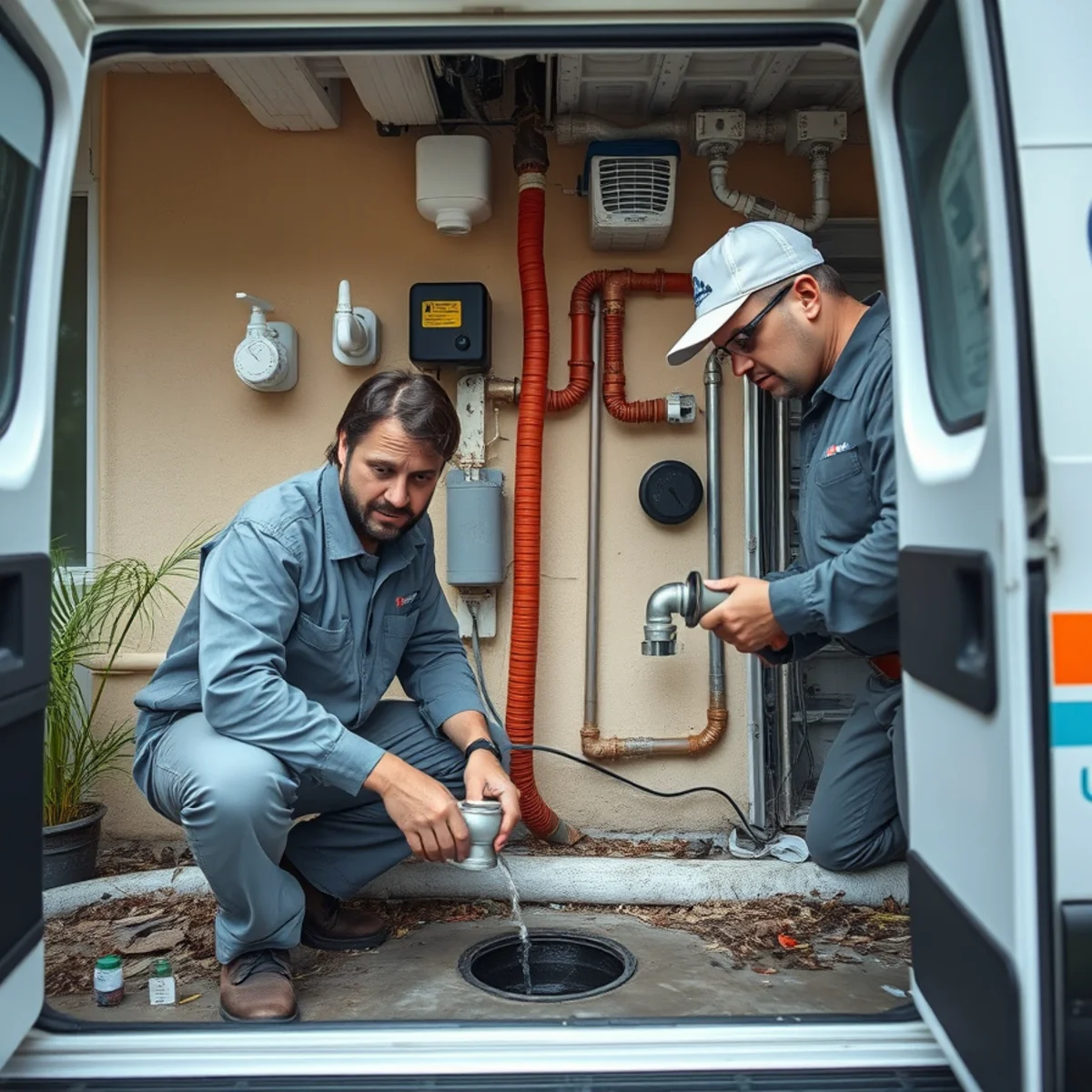
One slow sink is a branch problem. But when the toilet gurgles while the washing machine drains, the tub fills when you flush, and the kitchen and bathroom back up together, you are almost certainly looking at the main sewer line, the single pipe every fixture in the house shares.
Understanding that difference saves you money and time. You stop plunging individual drains that were never the problem, and you get the right tool on the right pipe the first time.
Branch clog vs. main-line clog: how to tell
A branch clog affects one fixture. The bathroom sink is slow but the toilet flushes fine, or one shower drains poorly while the rest of the house is normal. A main-line clog affects everything, because all those branches feed into it.
- Toilet gurgles or bubbles when you run a sink or the washer
- Water rises in the tub or shower when you flush
- The lowest fixtures in the house back up first
- Multiple rooms are affected at the same time
Why the lowest drain shows it first
Water follows gravity to the lowest opening it can find. When the main is blocked, everything you send down any drain backs up through the lowest fixture, usually a first-floor shower, tub, or floor drain. That is why a whole-house problem often looks at first like a single bad shower.
What usually causes a main-line clog in South Florida
In Palm Beach County and north Broward, a handful of causes dominate. Tree roots from ficus, banyan, oak, and melaleuca find their way into pipe joints and grow into a dense mat. Aging pre-1975 cast iron scales and narrows on the inside, catching everything. A high water table and sandy soil push fine sediment into the line and create low spots, or bellies, where waste settles. Grease and so-called flushable wipes do the rest.
Stop using water and call for main-line service
Once you recognize a main-line backup, stop running water so you do not force sewage up into the house, and call for main sewer line clog service. A technician will clear the line with a cable or jetter through a cleanout. This is not a job for a household plunger or a hardware-store auger, which cannot reach or clear a main.
Why a camera inspection is the smart follow-up
Clearing the clog gets your water flowing, but it does not tell you why it happened. A sewer camera inspection sends a camera down the cleared line to show exactly what is going on, roots at a specific joint, a scaled section of cast iron, a belly holding water, or a crack letting soil in.
That matters because the cause determines whether the clog comes back next month or stays gone. If roots are the problem, you know to cut and treat them. If the pipe is broken, you know before you pay to snake it again and again.
Why the lowest drain floods first
There is a simple logic to a whole-house backup, and it tells you a lot before anyone arrives. When the main line blocks, wastewater from every fixture upstream has nowhere to go, so it rises and escapes through the lowest opening in the system — usually a first-floor tub, shower, or floor drain — before it ever reaches a sink.
That is why flushing an upstairs toilet can make the downstairs shower gurgle and fill. It is not two separate clogs; it is one blockage downstream of both. Recognizing the pattern early — lowest fixtures first, more than one at a time — is the difference between a quick main-line clearing and a floor full of sewage.
Key takeaway: When multiple drains back up together, the main sewer line is the culprit; stop using water, get it cleared professionally, and use a camera inspection to find the underlying cause.
Need it cleared today? We're on call right now.
(614) 830-0578