Toilet Overflowing and Won't Stop? The 60-Second Shutoff Guide
An overflowing toilet is one of the few home emergencies where the first 60 seconds genuinely decide how bad your day gets. Water rising toward the rim feels like panic, but there is a fast, reliable way to stop it before it hits the floor.
This guide walks the exact steps in order. Learn them once and the next overflow is a minor annoyance instead of a ceiling repair for the room below.
Step 1: Take the lid off the tank
The tank is the back reservoir, not the bowl. Lift the lid and set it somewhere safe. Inside you will see the flapper, the rubber seal at the bottom, and the float. This is where you get instant control over the water.
Step 2: Push the flapper down to stop the flow
Reach in and press the flapper down over the hole at the bottom of the tank. That closes the seal and stops water from leaving the tank for the bowl, which is what stops the bowl from rising. Your hand touches only clean tank water, not bowl water.
Step 3: Lift the float to stop the tank refilling
With the flapper down, lift the float, the ball or cup on the fill assembly, to shut off the water refilling the tank. Hold it up until the bowl level drops. This buys you time without touching the wall valve at all.
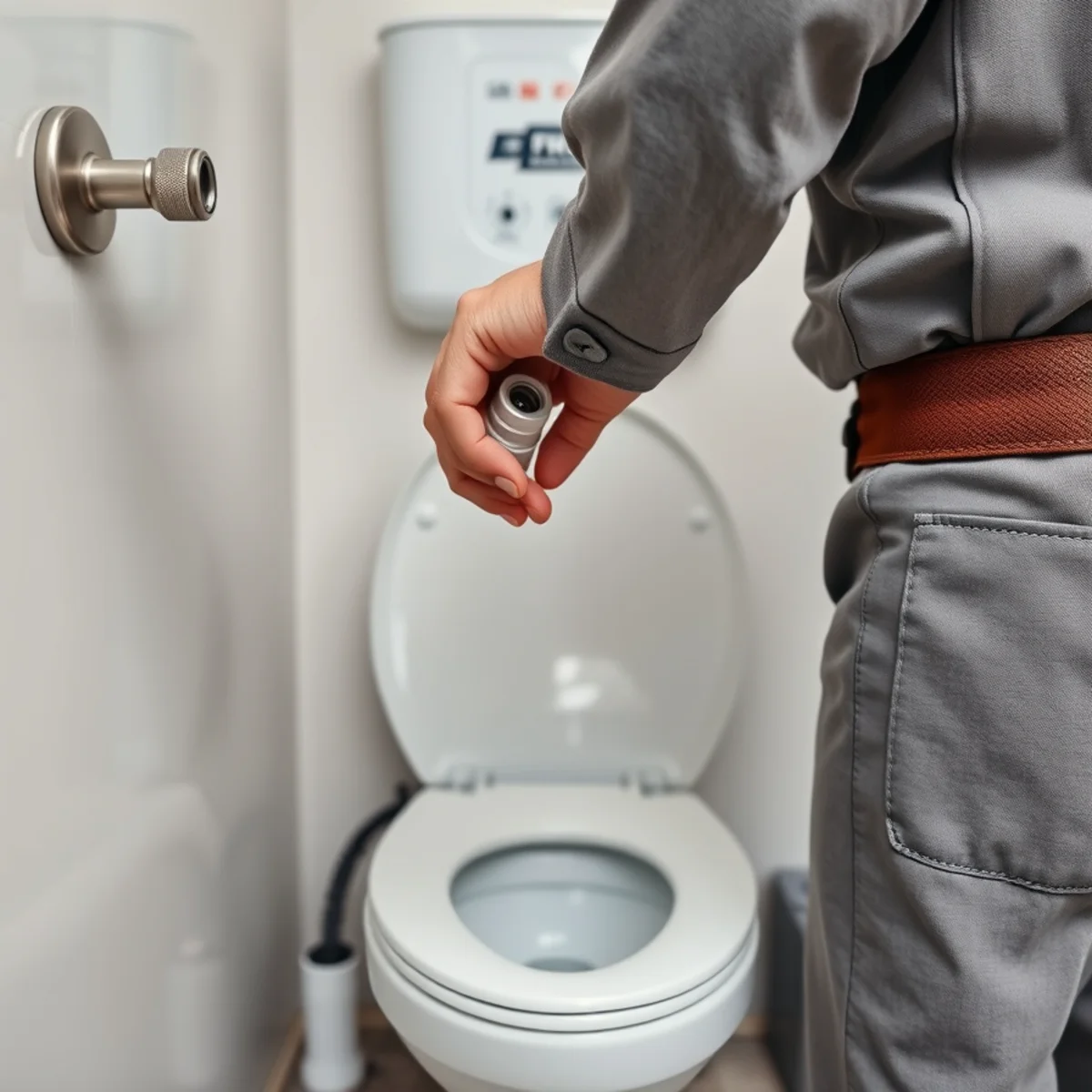
Step 4: Turn the shutoff valve at the wall
For a hands-free stop, turn the shutoff valve clockwise, righty-tighty, until it stops. It is the small oval or football-shaped knob on the water line behind or beside the toilet, low to the floor. If the valve is stiff or stripped and will not close, go to your home's main water shutoff and turn that off instead.
Step 5: Clear the clog once the water is stopped
With the water safely off, a flange plunger, the kind with an extended rubber sleeve, will clear most simple toilet clogs. Seal it over the drain and use firm, steady strokes. If that fails, a closet auger designed for toilets is the next step.
When the toilet is not really the problem
If plunging does nothing, or if other drains gurgle and back up when the toilet overflows, the blockage is not in the toilet. It is downstream, in the branch or the main line. That is a job for professional clogged-toilet service or main-line clearing, not more plunging.
Repeat overflows on the same toilet, especially in older Deerfield Beach and Coconut Creek homes on original cast iron, often trace back to a scaled or root-invaded line rather than the fixture itself.
What not to do with an overflowing toilet
A few instincts make an overflow worse. Do not keep flushing to “push it through” — each flush adds water with nowhere to go. Do not reach for chemical drain cleaner; it will not clear a toilet or a main-line blockage and it endangers whoever opens the line next.
And do not treat a toilet that clogs repeatedly as normal. A bowl that backs up every week, or bubbles when the shower runs, is telling you the problem is downstream in the branch or main, not in the toilet. Augering the same bowl over and over just delays the real fix, which starts with a camera.
Key takeaway: Push the tank flapper down, lift the float, then close the wall shutoff clockwise; if plunging fails or other drains gurgle, the clog is downstream and needs professional service.
Need it cleared today? We're on call right now.
(614) 830-0578