Condo Drain Stacks and Who's Responsible When Unit 3 Backs Up
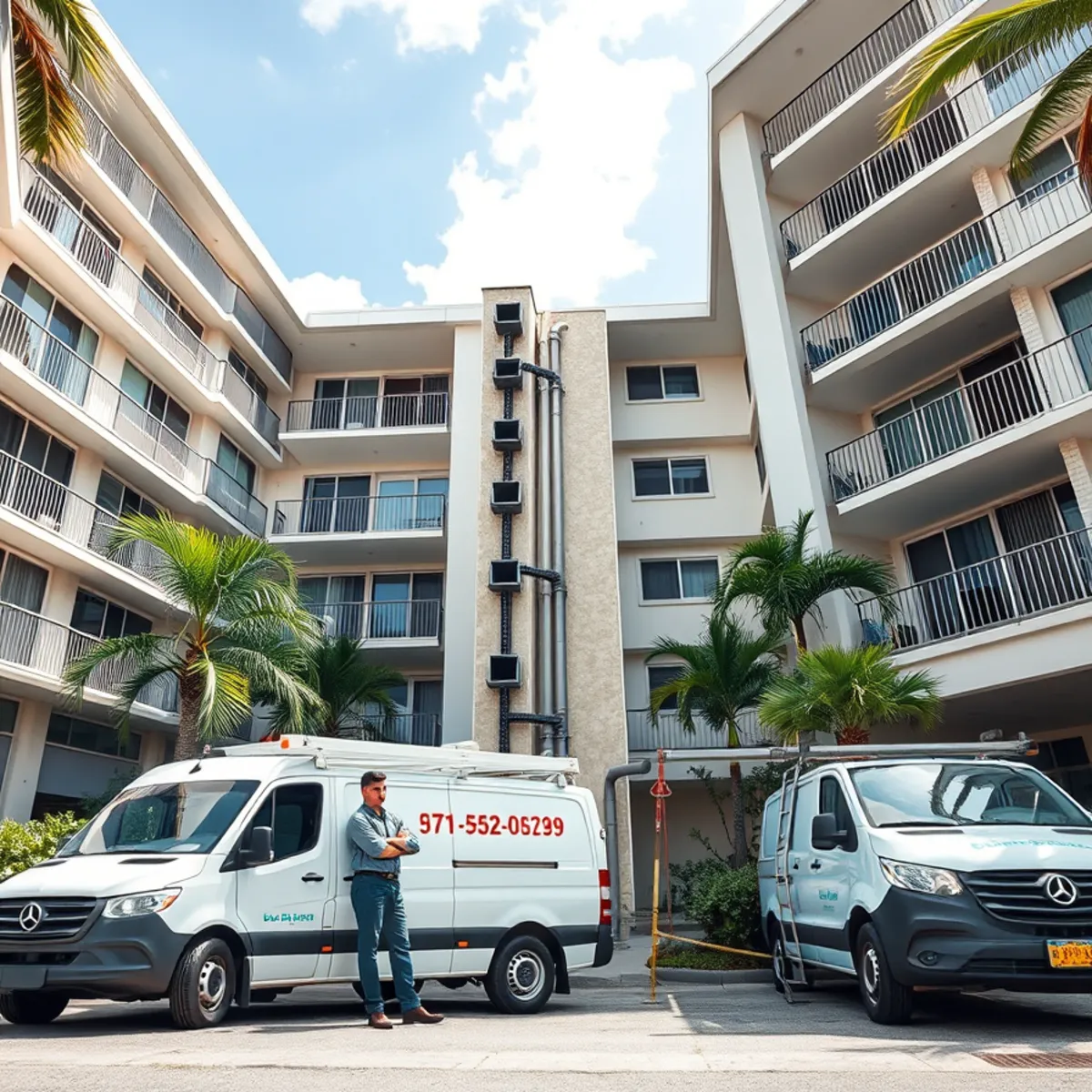
In a condo tower, the drains do not each run their own path to the sewer. Instead, units stacked vertically share a common drain stack, a single large pipe running down through the building. That design is efficient, but it means one blockage can back up several units at once, and it makes the question of who is responsible genuinely complicated.
This is general guidance. In any specific dispute, your condo declaration and association documents, along with Florida condo law, govern. But understanding how stacks work makes those documents far easier to interpret.
How a shared drain stack works
A vertical stack collects wastewater from the units above it and carries it down to the building's main line. Each unit ties into the stack with its own branch connection. When the stack itself clogs, everything above the blockage has nowhere to go, so it backs up, and it surfaces first in the lowest connected unit, which is why the bottom-floor unit often takes the damage from a problem created higher up.
The usual line: unit interior versus common element
As a general rule, plumbing inside a single unit that serves only that unit is the owner's responsibility, while the shared stack and common lines are the association's. So a clog in your own branch is typically yours, and a clog in the shared vertical stack is typically the association's, because it is a common element serving multiple owners.
The gray area is the connection between the two, and the exact wording varies. This is precisely what the condo declaration is written to define, so it is the first document to read when a backup happens.
Why the lowest unit suffers for the whole stack
It is common and frustrating: the owner whose unit floods did nothing to cause it. A blockage low in the stack backs up water from every unit above, and it exits through the lowest fixture it can reach. The damage lands on the ground-floor owner while the cause, and often the responsibility, lies with the shared line.
This is one reason associations, not individual owners, typically handle stack clogs, and why documenting the source of a backup matters for sorting out costs.
What causes stack backups in South Florida condos
- Aging cast iron risers, common in 1970s coastal towers, scaling and corroding
- Grease and food waste sent down kitchen lines by units above
- So-called flushable wipes that never break down
- Salt-air corrosion accelerating pipe decline in beachfront buildings
- Reduced flow during snowbird vacancies letting buildup harden
Why associations need scheduled stack service
Because a stack serves many units, a single backup can cause damage across several homes and generate disputes among owners. Scheduled hydro jetting of shared stacks, rather than waiting for a failure, is the practical way associations in Highland Beach, Hallandale Beach, and Aventura protect the building and avoid the mess. Commercial drain service that documents the work also gives the association a clear record.
What to do when your unit backs up
- Stop using water and notify the association or property manager immediately
- Photograph the damage and note which fixtures are affected
- Ask whether the backup is in your branch or the shared stack
- Review the declaration for the responsibility and insurance provisions
Read your condo documents before the next backup
When unit 3 backs up from a shared stack, who pays is a documents question as much as a plumbing one. Most declarations draw a line between common elements (the shared vertical stack and main lines, usually the association's) and the branch line serving a single unit (often the owner's).
It is worth reading your declaration and bylaws before there is water on the floor, so you know which side of that line your problem falls on. When we camera a shared line, the footage showing exactly where the blockage sits is what turns a finger-pointing dispute into a clear, documented answer for the board and the owners.
Key takeaway: Shared condo stacks mean one clog can flood several units; owners generally own their own branch and the association owns the shared stack, so read the declaration and schedule stack jetting to prevent failures.
Need it cleared today? We're on call right now.
(614) 830-0578