Why Cast Iron Drain Lines Fail in South Florida Homes Built Before 1975
If your South Florida home was built before 1975, there is a good chance its drain and sewer lines are cast iron, and there is an equally good chance those lines are now near the end of their service life. Cast iron was the standard for decades, and it lasted a long time, but not forever.
Understanding how cast iron fails helps you read the warning signs early, before a slow drain becomes a slab leak or a collapsed line under the yard.
How cast iron corrodes from the inside out
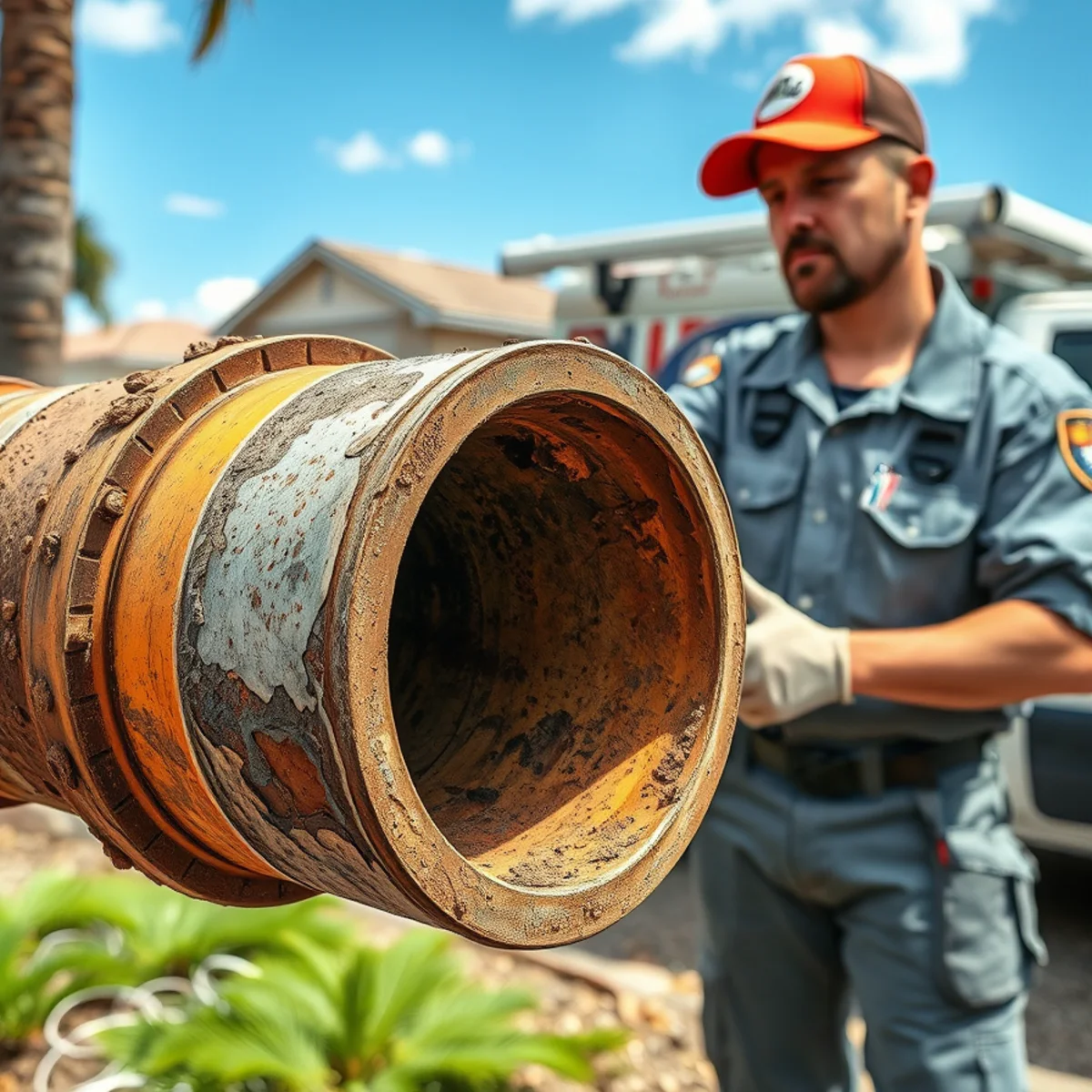
Cast iron rusts, and drain pipe rusts from the inside where it is constantly wet. Over decades, corrosion builds up as scale, a rough, flaky layer that narrows the pipe and snags everything that passes. What started as a smooth two-inch line effectively becomes a rough one-inch line, so it clogs on far less than it used to.
Eventually the corrosion eats all the way through the pipe wall. The bottom of a horizontal cast iron line, the invert, is where waste sits longest, so that is usually where it fails first, cracking, flaking away, and finally opening a channel to the soil.
Why South Florida is especially hard on it
- Salt air along the coast accelerates corrosion on the outside of the pipe
- A high water table keeps lines and surrounding soil constantly damp
- Sandy soil and sediment infiltrate through cracks and abrade the interior
- Aggressive tree roots, ficus, banyan, oak, melaleuca, exploit any weakness at the joints
The warning signs of failing cast iron
- Drains that get slower every year across the whole house
- Repeat clogs in the same line no matter how often it is snaked
- Sewage odors indoors or damp, sunken spots in the yard over the line
- Discolored water or fine grit backing up into fixtures
- Cracked or lifting floor tile over a slab line
Cleaning versus replacement
Not every scaled line needs to be replaced. Hydro jetting can remove scale and restore much of a cast iron line's diameter, and a camera inspection tells you honestly whether the pipe underneath is still sound or too far gone. On a line that is scaled but structurally intact, cleaning buys years.
When the pipe wall has failed, cracked, holed, or collapsed, cleaning is not enough and the section needs repair or replacement. In Florida, that repair or replacement of piping is licensed plumbing work, so verify a contractor's DBPR license before you authorize it. Drain and sewer cleaning itself is generally unlicensed, but pipe repair is not.
Get a camera inspection before you decide anything
The worst way to spend money on old cast iron is to guess. Repeatedly snaking a line that is actually broken just delays the real fix and adds up fast. A sewer camera inspection shows the true condition, scale, cracks, bellies, root intrusion, so you can make one informed decision instead of a series of expensive stopgaps.
How to tell if your cast iron is failing or just dirty
There is an important difference between a cast iron line that is scaled and one that is failing, and only a camera reliably tells them apart. A dirty line shows a rough, rust-tinged wall and a narrowed channel — that responds well to jetting, which restores the real diameter.
A failing line shows cracks, channeling along the bottom where the pipe has corroded through, flaking that drops debris into the flow, or sections that hold water because the pipe has sagged. Those are repair conversations, not cleaning ones. Seeing the footage yourself is what keeps the decision honest — nobody should call your pipe “bad” without showing you why.
Key takeaway: Pre-1975 cast iron lines scale and corrode from the inside; a camera inspection tells you whether jetting can restore the line or whether licensed repair is needed, so you fix it once instead of snaking repeatedly.
Need it cleared today? We're on call right now.
(614) 830-0578